I build applications without a developer background. Vibecoding: Claude or Cursor as co-developer, me as the client. And every time a session runs long enough, the same thing happens. A bug we fixed an hour earlier suddenly reappears. Or the model doesn't grasp the context I explained twenty messages ago. I first thought: carelessness. But it is something structural. The model forgets what sits in the middle.
Scientists call this the 'Lost in the Middle' effect. And it is one of the most stubborn limitations of the AI models we use every day.
But here's where it gets really interesting.
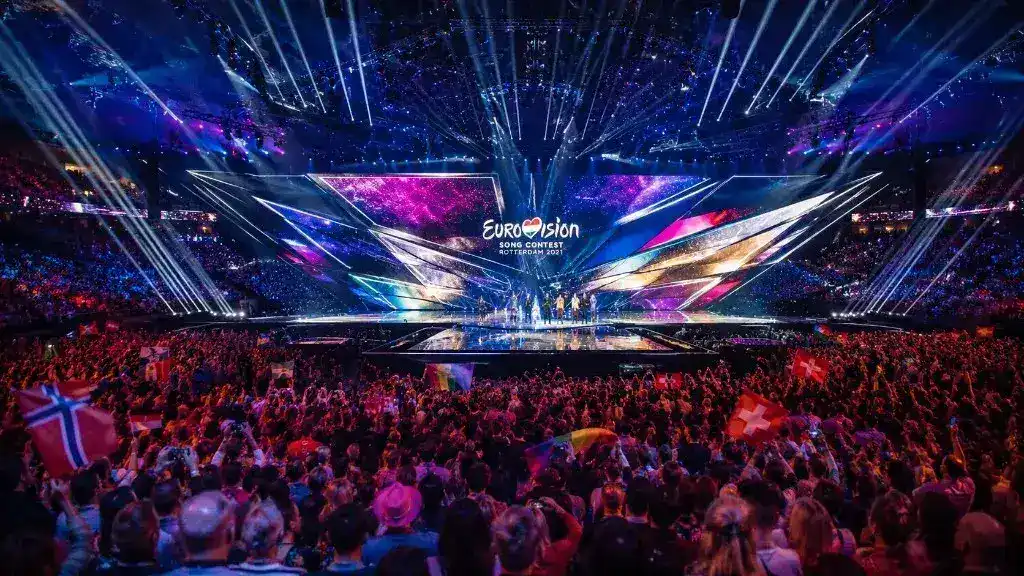
That same effect plays out every year in the living rooms of more than 160 million Eurovision viewers. Live. In realtime. With exactly the same outcome.
The serial position effect: from 1885 to 2025
German psychologist Hermann Ebbinghaus discovered it back in 1885. When you present people with a long sequence of information, they remember the beginning and the end. The middle disappears.
Science splits this into two effects. The primacy effect: the first items get your full attention and are stored in long-term memory. And the recency effect: the last items are still fresh in your working memory.
Everything in between? Crowded out. Overwritten. Forgotten.
This is not an opinion. This is neurochemistry.
And now: AI
Large Language Models like Claude and ChatGPT use an architecture called Transformers. That architecture has a mechanism called 'self-attention'. In theory, the model can relate every word to every other word in the text.
In practice, it works differently.
An AI model has a limited amount of attention to distribute. Compare it to a three-hour meeting. At the start you are sharp. At the end too, because decisions are being made. But hour two — the middle — fades into a blur. Not because you weren't paying attention. Simply because there was too much to weigh everything equally.
An AI model works exactly like this. The longer the session or document, the less weight information in the middle receives. Not deliberately. Not intentionally. It is baked into how the system is built.
The result? A U-shaped performance curve. Good start. Good end. Middle gone.
Exactly the same U-shape as human memory. But driven by mathematics rather than neurochemistry.
And the frustrating part: most people who work with these tools every day don't know this. They do notice that the answer is sometimes right and sometimes not. They think they're asking the wrong question. Or that the model is bad. The real reason stays out of view. Even though that reason is structural. Predictable. And solvable.
The Eurovision evidence
Researchers Evgeny Antipov and Elena Pokryshevskaya of the Higher School of Economics published an analysis of order effects in song contests — including the Eurovision Song Contest — in the scientific journal Judgment and Decision Making in 2017.
Their conclusion is clear.
In the New Wave Song Contest, the order effect is statistically significant. Jury members score there immediately after each performance, without the chance to look back. Those who perform later consistently score higher. The starting number was randomly assigned, so it says nothing about the quality of the act. Only about the moment that act takes the stage.
For Eurovision itself, the researchers found weaker but present evidence of the same effect in the finals from 2009 to 2012. During that period, the running order was still determined by draw, not by producers. After 2012, the organisation intervened. Producers took control, which complicates statistical analysis.
What nobody disputes: starting slot number 2 is the infamous death slot. Your song gets immediately overwritten by everything that follows. The viewer's attention is not yet warmed up. Voting lines are not yet open. Whoever performs second is forgotten by the time votes can be cast.
Follow me on LinkedIn
Jury versus public
Thanks to the availability of split data — available per country from 2014 and announced separately on television from 2016 — the comparison can be made.
And that comparison is interesting.
For professional jury members, the order effect is present but weaker. Logical: jury members watch rehearsals, work with criteria, are trained to evaluate systematically. They are better equipped to resist the middle problem.
But completely immune? No. The effect remains visible.
This is exactly what you also see with AI applications. A well-designed prompt with clear instructions reduces the Lost in the Middle problem. But it doesn't solve it.
Voting from the start
In 2024, the Song Contest reintroduced something that had also applied in 2010 and 2011: viewers could vote from the very first performance, rather than only at the end. The idea: if you vote earlier, you weigh all performances more consciously. Not just the last few that are still fresh in your memory.
For AI, exactly the same principle applies.
The solution is not complicated. You make sure the most important information doesn't disappear in the middle.
Some systems do this automatically: they cut long texts into smaller chunks and process them separately. Other systems save the core of earlier conversations and retrieve it at the right moment. That way the model doesn't have to wade through a mountain of text to find what matters.
The principle is the same as voting during the performances: you judge each moment on its own merits, rather than relying on what you remember best at the end.
What does this mean for you?
This is how I do it now: everything I don't want to lose, I put at the top of every new session. A decision we've already made. A problem that's already been solved. Never left to drift in the middle. That has cost me more hours than I want to admit.
Most people don't do this. Not because they're lazy. But because nobody explained to them that the middle disappears. They trust an AI that sounds like it has taken everything in. That's true. But weighing everything equally is not something it does.
There are two things you can do tomorrow.
Always put the most important information at the top of your message. Repeat it as the session grows longer. And split your problem into separate conversations if you feel like you've been in one chat too long. Just start a new one. Fresh start, fresh attention. The model then forgets nothing, because it has nothing to remember from a long session.
The middle is a mass grave. For human attention. For AI attention.
Design your approach around it, or become its victim. That choice is yours.
This article is based on the research by Antipov & Pokryshevskaya (2017), "Order Effects in the Results of Song Contests: Evidence from the Eurovision and the New Wave" (opens in new window), published in Judgment and Decision Making (Vol. 12, No. 4), and the "Lost in the Middle" (opens in new window) research by Liu et al. (2023), Stanford University / Meta AI.