By 2029 there will be four AI winners, not one. Google at consumers, Microsoft at the office, Anthropic at specialists, and OpenAI as a strong number two plus an independent AI layer for those who don't want to pick a side.
But for the average consumer, Google will probably win. Not because Gemini is necessarily better — although the new model Gemini 3.5 Flash scores well in benchmarks. But because Alphabet has the strongest combination of five building blocks simultaneously: data, distribution, proprietary chips, cash flow, and existing usage moments. Not a single moat. A stack.
Four Markets, Four Winners
The press writes about the AI race as if there is one market with one winner. I disagree. There are four markets, each with a different logic, and each will probably produce a different winner.
The consumer market is the broadest: billions of people who search, email, navigate, watch video, manage photos, and plan. Google will probably win there, because it is the only one that can embed AI into every existing habit. The office market is the general business market: many companies run on Microsoft 365. Microsoft wins there, not because Copilot is necessarily better, but because it's already in Word, Excel, Outlook, and Teams. The specialist market is the market of developers, lawyers, financial advisors, and other knowledge workers. Anthropic wins there, because Claude does more for less money in those domains. And then there's OpenAI: strong number two with consumers thanks to brand and habit, and beyond that the neutral AI layer that the other three still use.
This piece is about the first market. Because it affects everyone.
Why Google Will Probably Win the Consumer Market
The consumer battle won't be decided by the smartest model in a test. It will be decided by the combination of five building blocks. Winning one isn't enough. Winning three is usually not enough. Four or five is what tips the market.
Google has all five.
1. Existing Usage Moments
This is the underestimated advantage. Google doesn't need to convince consumers to install something new. It just needs to make existing products smarter. Open Chrome and you have Gemini. Open Android and you have Gemini. Ask a question in Search and you get an AI Overview. That's not an active user choice. That's a habit slowly mutating.
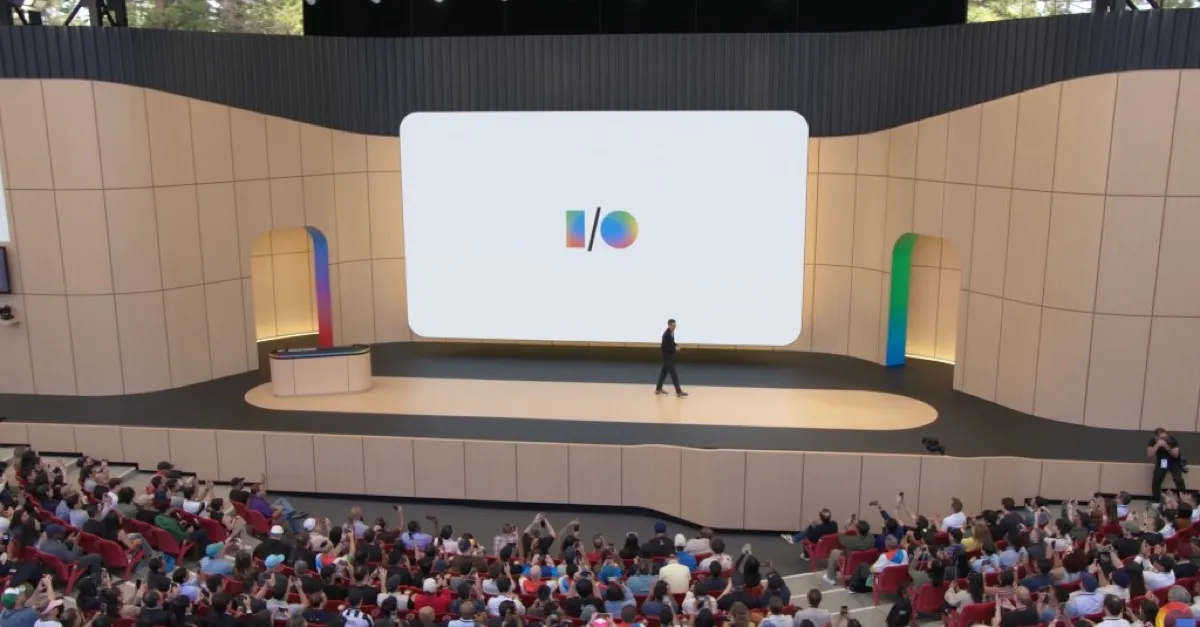
On May 19, Google made this literal. At Google I/O, the company launched Gemini Spark: a 24/7 personal agent that executes actions on behalf of the user, embedded in Gmail, Calendar, Drive, and Tasks, and connected via MCP links to services like Uber, OpenTable, Instacart, and Zillow. Spark is not a new app you need to install. It sits in the Google account you already have. That's exactly the logic by which Google wins the consumer market: not by being better in a test, but by being present in the place where you already work.
OpenAI needs to be on one phone: someone has to take a separate action for this. Google is already on billions of phones. According to StatCounter (opens in new window), Android had a 67.35% global mobile OS market share in April 2026, and Chrome had 68.02% of the browser market across all devices. On those phones and in those browsers, there's no default ChatGPT tile. There's Gemini.
The Gemini app had 400 million monthly users at Google I/O 2025. At I/O on May 19, 2026, Pichai reported this had more than doubled to 900 million. Daily requests grew 7x in that same year. Add the Apple deal: Google Cloud-baas Thomas Kurian confirmed at I/O that Gemini will power a newer, more personalized version of Siri later this year. Apple is therefore choosing Google over OpenAI as its AI partner for a second time, even after Anthropic and other alternatives became available.
2. Distribution via Search
Google had a 90.02% global search market share (opens in new window) in April 2026. Bing was at 5.14%. Nine out of ten search queries on earth go through Googles infrastructure. AI Overviews now reaches 2.5 billion monthly users, Pichai reported on May 19 at Google I/O (opens in new window), and AI Mode is approaching 1 billion users. Pichai's words about Search at I/O were telling: "When people use our AI-powered features in Search, they use Search more." Liz Reid, Googles VP of Search, put it even more sharply: "We're entering the next chapter of Google Search. Google Search is AI search, through and through."
More important than the market share: Google sees which questions people ask, which answers they click, and which questions they reformulate again afterwards. That's not an ordinary dataset. That's global query intent, billions of times per day. For AI models that need to learn what people really want, that's the most valuable training signal that exists.
3. Proprietary Chips
On April 22, 2026, Google brought two new AI chips to market: TPU 8t for training, TPU 8i for inference. According to Google, the TPU 8t delivers 2.7x better performance per dollar than the previous generation for training. The TPU 8i does 80% better per dollar for inference. The price is 40 to 50% lower than comparable Nvidia GPUs. According to SemiAnalysis (opens in new window), OpenAI saved approximately 30% on its Nvidia fleet once they started ordering TPUs as well.
Whoever doesn't have their own chips pays Nvidia. Nvidia has a gross margin of 75%. That's not just a detail. That's a structural cost that makes the difference between profitable consumer AI and burning billions annually.
4. Proprietary Cash Flow
Alphabet had revenues of $402.8 billion in 2025 (opens in new window). Q1 2026: $109.9 billion in revenue, with an operating margin of 36.1%. Google Services alone accounted for $89.6 billion in that single quarter, with Search ads still growing 19% annually and YouTube ads 11%.
That's not an AI company trying to make a profit. That's an advertising machine with enough cash flow to subsidize AI models. Gemini can stay free because Search ads pay for it. At Google I/O, Google lowered the entry price of its top AI Ultra subscription from $250 to $100 per month, while Anthropic's Claude Pro is at $200 and OpenAI's ChatGPT Pro at $200. Google can offer its premium product cheaper than competitors who have to purchase all their compute.
Nobody else has anything like this. OpenAI reportedly expects (opens in new window) to spend around $50 billion on compute in 2026, on its way to $600 billion by 2030. Anthropic is growing fast but still burning cash. Only Google has its own money machine that pays the AI bill by itself.
5. Multimodal Data
For consumers, AI is becoming multimodal: image, sound, video, behavior. That's where Googles fifth advantage lies. YouTube generated more than $60 billion in revenue in 2025 from advertising and subscriptions. More important than the revenue is what YouTube is as data: billions of hours of video, with titles, descriptions, subtitles, comments, and viewing behavior. That's a multimodal training file that no competitor has. OpenAI has to try to scrape or purchase that data somewhere. Google has owned it since 2006.
Gmail, Photos, Maps, and Workspace each add their own data layer. For those who want to build AI assistants that understand your actual day — what's in your calendar tomorrow, which route did you take to work, who did you email about that project — Google has an advantage that can't be bought with money.
Follow me on LinkedIn
OpenAI Remains a Strong Number Two
This is where I diverge from the narrative of Googles advantages. OpenAI isn't losing the consumer market. It's becoming second. And being second in a market where billions of people participate is no small thing.
ChatGPT had more than 800 million weekly users (opens in new window) at the end of 2025. It has become the first consumer AI product that became a verb: people say "I'll ask ChatGPT" the way they once started saying "I'll Google it." That's mental ownership of the category. That's worth gold, and it doesn't disappear quickly.
OpenAI also has something Google doesn't: a neutral position. It's not a search engine that sends you toward ads. It's not a phone operating system that measures your location. It's not an advertising business at YouTube scale. For consumers concerned about Googles dominance, ChatGPT is for that exact reason a logical alternative.
What does make OpenAI structurally weaker is the cost side. The company has to purchase all its compute from Microsoft, Oracle, CoreWeave, and others to come. Reuters reported that OpenAI may spend $50 billion on compute in 2026, on its way to $600 billion by 2030. That explains why OpenAI is now testing ads in ChatGPT (a pilot already generated $100 million in six weeks) and why there's an IPO discussion around a trillion-dollar valuation. The chair under ChatGPT is more expensive than the one under Gemini.
But OpenAI is not out of the game. It becomes the Pepsi of consumer AI. Not the market leader. But indispensable.
Microsoft Wins the Office
For the average consumer, Copilot is not a brand name you'd recommend to your mother. But put that same Copilot in a company with Microsoft 365, and it wins almost automatically. Not because it's the best AI. But because it's already logged in.
Microsoft reported in April 2026 (opens in new window) that its AI business had reached an annual run-rate of $37 billion. Microsoft 365 Copilot stands at more than 20 million paid licenses, a growth of approximately 250% year-on-year. Nearly 90% of the Fortune 500 has now built active AI applications on the Microsoft stack with Copilot Studio and AI agents.
That doesn't look like consumer AI, and that's exactly the point. In companies, integration outweighs magic. Copilot is in Word, Excel, PowerPoint, Outlook, Teams, SharePoint, and Defender. The procurement department doesn't need to onboard a new vendor. The security department doesn't need to do a new risk analysis. For SME directors with Office 365, that's the shortest route to working AI.
Anthropic, the Specialist with the Highest Value per User
For my work, Claude is better than any other model. And yet I don't think Anthropic wins the race I'm describing in this piece. It wins a different one, and that's a market nobody should underestimate.
Anthropic is conquering the developer's office and the Fortune 500 boardroom. Claude Code has, according to Anthropic itself (opens in new window), a run-rate of more than $2.5 billion. Anthropic's total run-rate grew from $9 billion at the end of 2025 to $45 billion in May 2026. In February 2026, the company raised $30 billion (opens in new window) at a valuation of $380 billion. That's not a company that's losing. That's a specialist capturing market share in every domain where precision beats scale: programming, legal, finance, audit, analysis.
Anthropic won't become a consumer champion. It doesn't need to be. For 1,000 enterprise customers spending more than a million dollars annually, the math is different than for 800 million weekly chatbot users. The value per user at Anthropic is many times higher. That's a rational choice, not a loss.
And even Anthropic acknowledges where the mass is. That's why the company purchased $200 billion in cloud capacity from Google in May, 40% of Googles entire cloud backlog. Five times more than Google inversely invested in Anthropic. That's not a partnership between equals. That's a specialist strategically leaning on the infrastructure champion.
What This Means for Those Choosing Now
My reader is usually not a stock analyst. It's a director, an MT member, an entrepreneur who in 2026 needs to determine which AI vendors will play a role in their organization. To everyone making that choice now: you're not choosing one. You're probably choosing two to three. And that's not a risk. That's the logic of this market.
Do you have Office 365 and few developers in-house? Copilot is probably the pragmatic starting point. Do you have a team that works a lot with data, code, or complex documents? Claude deserves a serious trial. Do you want an AI you can just ask things, the way you once asked Google? Gemini will be embedded in every Google product for you within three years. Do you want an AI layer that's not tied to one ecosystem? Then keep ChatGPT alongside.
What you shouldn't do is bet on one party that "wins the AI race." No single party wins that. What I wrote in an earlier piece on data as a moat, applies to vendors even harder. Not the most hyped vendor wins. The one that in your market has the best combination of data, distribution, costs, and usage moments.
For the consumer market, that answer is already clear. For the other three markets too. It's just not one answer.
On page 27 of Het Financieele Dagblad of May 12, there was a chart that captures this entire story in one image: the market capitalization of Alphabet, which rose 140% over the past year and is nearly catching up to Nvidia. That's not a price movement. That's the market rediscovering what it briefly forgot between 2022 and 2024: that data, distribution, chips, cash flow, and usage moments ultimately always beat a good brand and a fast start.
ChatGPT had the most beautiful start. Google has everything that matters after that for the consumer. Microsoft has everything that matters for the office. Anthropic has everything that matters for the specialist. And OpenAI? Strong number two in the broadest market. Not nothing.
The question is therefore no longer who wins the AI race. There are four of them. The question is: which of those four markets are you in, and who will probably be your vendor there?
Sources
- Alphabet 2025 Annual Report — SEC 10-K filing (opens in new window)
- Google I/O 2026 keynote Sundar Pichai, May 19, 2026 (opens in new window)
- StatCounter — Search engine market share April 2026 (opens in new window)
- StatCounter — Mobile OS market share April 2026 (opens in new window)
- SemiAnalysis — Google TPUs and OpenAI's chip economics (opens in new window)
- Reuters — OpenAI compute spending 2026 (opens in new window)
- Microsoft — AI business update April 2026 (opens in new window)
- Anthropic — Series G funding round $30B (opens in new window)