TL;DR
- In 2015 zei ik tegen AMweb dat het vak minder toegankelijk werd omdat niemand meer zonder diploma mocht beginnen.
- Die klacht kan ik nu onderbouwen: 29,7% minder gehaalde Wft-examens in zes jaar tijd, becijferd in mijn eigen analyse van het adviseurstekort.
- AI helpt bij het opleiden van nieuwe adviseurs, maar lost het tekort aan mensen niet op.
- Twee kleinere observaties uit 2015, over het bonus-malussysteem en over "klant centraal" als loze kreet, staan nog steeds overeind.
- Over blockchain-verzekeringen had ik het volledig mis, en dat zegt iets over hoe ik nu naar AI-hype kijk.
Wat ik zei over het diploma-tekort
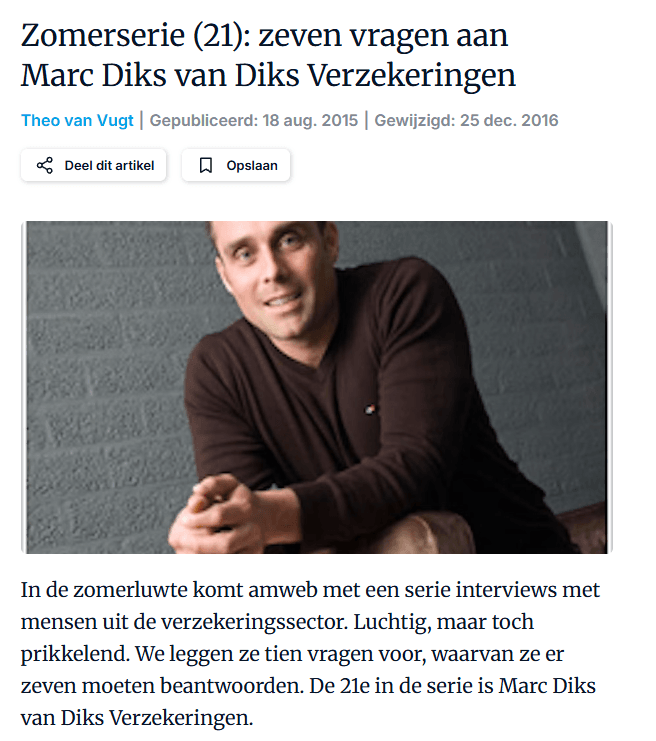
Op 18 augustus 2015 beantwoordde ik zeven vragen voor de zomerserie van AMweb. Theo van Vugt vroeg me naar mijn boodschap aan toenmalig minister Dijsselbloem, en ik antwoordde dat het vak minder toegankelijk werd omdat niemand meer zonder diploma mocht beginnen.
"Ons vakgebied is hierdoor minder toegankelijk geworden", zei ik letterlijk. Dat was toen geen model of dataset, maar een observatie uit de dagelijkse praktijk van Diks Verzekeringen.
Ik pleitte destijds ook voor meer ruimte bij eenvoudige schadeproducten. Onder toezicht van een ervaren leidinggevende zou een medewerker daar volgens mij al verantwoord advies kunnen geven. Bij complexe producten zoals hypotheken ligt dat natuurlijk anders.
De cijfers die ik er nu naast kan leggen
Deze zomer legde ik zes jaar CDFD-examendata naast elkaar. Tussen 2019/20 en 2024/25 daalde het aantal daadwerkelijk gehaalde Wft-examens met 29,7%, van ongeveer 17.800 naar ongeveer 12.500. Acht van de negen examenmodules scoren inmiddels lager dan vijf jaar geleden.
Die 12.500 gehaalde examens zijn geen 12.500 nieuwe adviseurs, want een beroepskwalificatie vraagt vaak meerdere modules. De zuiverste instroommeter is Wft Basis. Dat haalden in 2024/25 ongeveer 5.600 mensen, tegenover 7.300 vijf jaar eerder: 24% minder.
Op basis van die instroom, de leeftijdsopbouw van de huidige adviseurs en de verwachte pensioenuitstroom bouwde ik een cohortmodel richting 2040. Mijn volledige berekening staat in adviseurstekort: de generatie van 2040 is al geboren.
Daarbovenop speelt demografie. De jaargangen die de opvolgers moeten leveren zijn kleiner, en de gemiddelde PE-kandidaat is in zes jaar vier jaar ouder geworden. Wie in 2040 op kantoor werkt, is nu al geboren. Die groep is simpelweg kleiner.
Volg mij op LinkedIn
AI helpt, maar lost het tekort niet op
In mijn eigen praktijk gebruik ik AI al bij het inwerken van nieuwe mensen, bijvoorbeeld met NotebookLM op Wft-lesstof. Dat versnelt leren zichtbaar. Ook in dossiervoorbereiding en eerste adviesconcepten levert AI nu al waarde.
Maar AI vergroot geen aantal diploma's. De AFM eist dat een mens met de juiste bevoegdheid adviseert. Daarom blijft mijn eerdere punt overeind dat je vergunning je bestaansrecht is.
Werving alleen lost dit ook niet op. Als ik een adviseur wegtrek bij een ander kantoor, is er landelijk niets bijgekomen. De echte knop zit in klantwaarde per gekwalificeerde adviseur.
Tegelijk zie ik een nieuw risico: als AI al het juniorwerk overneemt, verdwijnt ook praktijkopleiding. Dat risico beschreef ik eerder als never-skilling.
Twee kleinere dingen die nog kloppen
Het bonus-malussysteem. In 2015 noemde ik dit als eerste verbeterpunt, omdat de meeste klantmisverstanden hierover gingen. Elf jaar later is dat in mijn ervaring nog steeds zo.
"Klant centraal" als loze kreet. Ook dat punt uit 2015 blijft staan. We zeggen het graag, maar in de praktijk zie ik nog steeds veel half werk.
Waar ik het volledig mis had
In het interview voorspelde ik dat blockchain-verzekeringen de branche op korte termijn zouden ontwrichten. Ik verwachtte zelfs dat een buitenstaander de eerste grote stap zou zetten.
Elf jaar later zie ik die doorbraak niet. Voor zover ik kan vaststellen, is er in Nederland geen blockchain-verzekeraar van betekenis opgestaan en zijn veel initiatieven niet voorbij de pilotfase gekomen.
Achteraf stelde ik toen de verkeerde vraag. Ik keek naar wat technisch mogelijk was, niet naar een klantprobleem dat direct pijn deed.
Wat een gefaalde voorspelling me nu leert over AI-hype
Het verschil tussen mijn juiste diploma-inschatting en mijn foute blockchain-inschatting zit vooral in de bron. Het diploma-punt kwam uit dagelijkse praktijk. De blockchain-claim kwam uit theorie die ik zelf niet in productie had gezien.
Dat onderscheid gebruik ik nu ook bij AI-claims. Toepassingen die ik zelf bouw of test, onderbouw ik stevig. Claims die alleen uit keynotes of LinkedIn-posts komen, behandel ik voorzichtiger.
Ik schrijf dit niet om mezelf gelijk te geven op het ene punt en vrij te pleiten op het andere. Ik schrijf het omdat dit precies laat zien welke voorspellingen de moeite waard zijn om serieus te nemen.
De jaargang 2023 telde 164.000 kinderen. Het diploma-tekort dat ik in 2015 als verzuchting opschreef ligt daarmee voor een groot deel al vast. Over elf jaar leg ik mijn volgende voorspelling hier weer naast.
Bronnen
* Het originele interview uit 2015: amweb.nl (opent in nieuw venster) * Mijn eigen berekening van het adviseurstekort: marcdiks.nl (opent in nieuw venster) * Het blockchain-artikel waar ik in 2015 zelf naar verwees: amweb.nl (opent in nieuw venster)